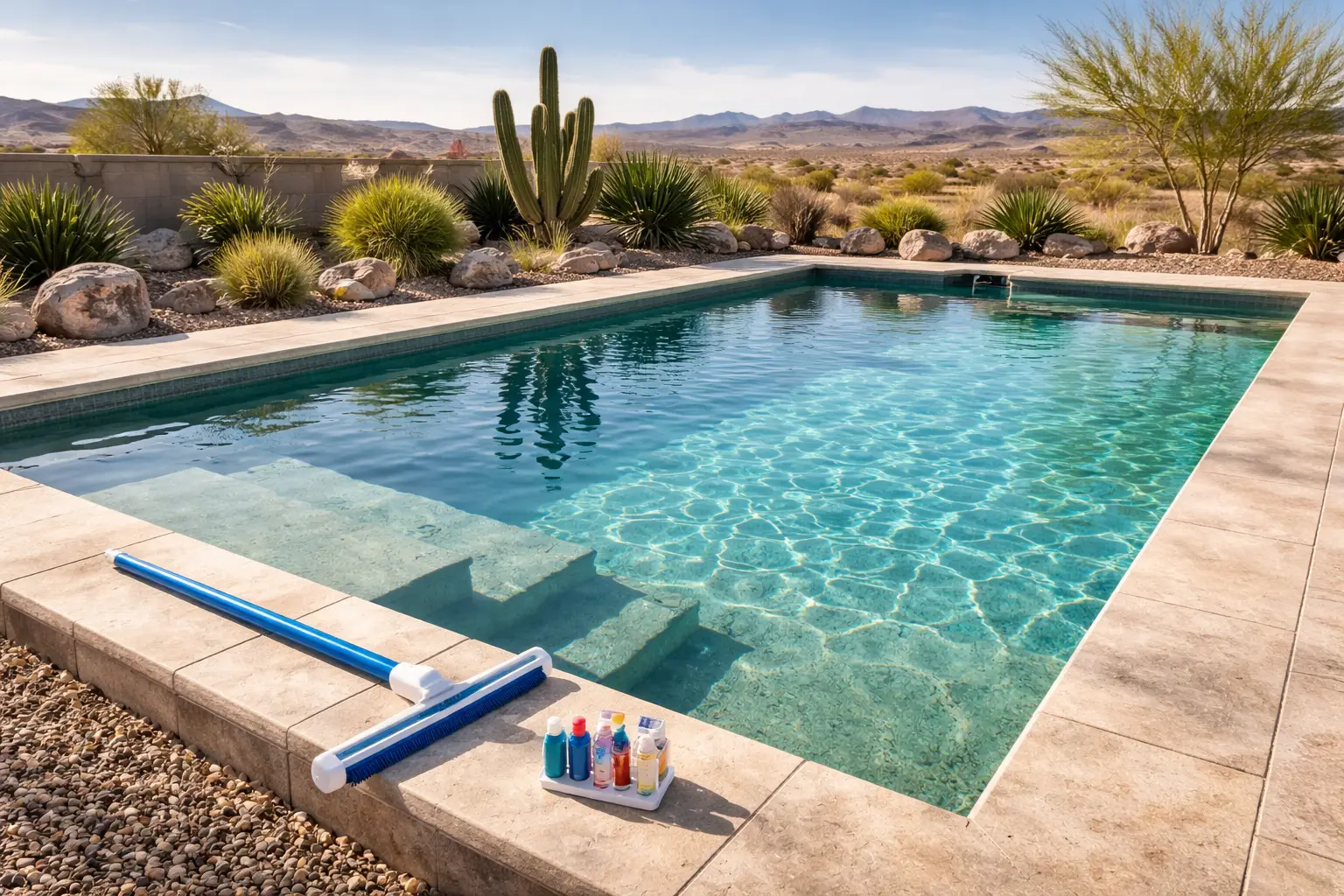
Early-Season Algae Prevention in Lake Havasu: When February and March Suddenly Feel Like Summer
It can be a little shocking how fast a Lake Havasu pool can shift from “looks fine” to “why is there a green tint?” In late winter and early spring, you can get warm, bright afternoons that push into true swim-weather territory, even while nights still cool down. That temperature swing, plus intense Arizona sun, is the perfect recipe for algae to wake up early.
The good news is that early-season algae is one of the easiest problems to prevent, if you test the right things first and stay consistent with brushing and chlorine.
Why warm afternoons can kick off algae early
Algae does not need a full-blown heat wave to start growing. It needs opportunity.
In February and March around Lake Havasu, opportunity usually shows up as:
-
Warm afternoon water temps that climb quickly after a cool night
-
Longer daylight hours and strong sun that accelerate growth
-
Low or inconsistent chlorine (often from “off-season” habits)
-
Dust and wind-blown debris feeding algae and clogging filtration
-
Lower circulation time because the pump is still on a winter schedule
Even if the water still feels chilly, algae can begin colonizing shady areas, steps, behind ladders, and corners where circulation is weakest. Once it gets a foothold, it can multiply quickly.
What to test first (in this order)
When you see the first hint of dullness or a faint green tint, do not start dumping products in blindly. Test these basics first:
1) Free Chlorine (FC)
This is your main defense. If FC is low, algae can start growing even if everything else looks okay. CDC guidance for home pools recommends maintaining at least 1 ppm free chlorine, and at least 2 ppm if you use cyanuric acid (stabilizer).
2) pH
Chlorine works best when pH is controlled. CDC recommends keeping pool pH in the 7.0 to 7.8 range.
3) Cyanuric Acid (CYA, stabilizer)
CYA protects chlorine from the sun, but it also changes how much chlorine you need to keep algae away. If CYA is too low, sun burns off chlorine fast. If CYA is too high, chlorine becomes less effective unless FC is maintained higher.
A common residential-pool rule of thumb is to keep minimum FC around 7.5% of CYA (for example, CYA 40 ppm would mean staying at or above about 3 ppm FC). This is not the only method, but it is widely used for algae prevention in outdoor pools.
4) Filtration pressure and flow
If your filter is dirty, your water can look hazy and your chlorine demand can rise. Check the pressure gauge and overall return flow. If pressure is high or flow is weak, the filter likely needs cleaning.
5) Combined Chlorine (CC), if you can test it
If CC is elevated, chlorine is busy breaking down contaminants instead of preventing algae. It is a helpful “stress indicator” for the pool.
The simple weekly routine that prevents most early algae
If you want a practical plan for February and March in Lake Havasu, consistency wins. Here is a weekly approach that stops most algae before it starts.
Brush first, then sanitize
Brushing does two important things:
-
It breaks up early algae films before they become visible.
-
It knocks debris loose so your filter can remove it.
Weekly minimum: Brush walls, steps, and benches once per week.
Better during warm spells: Brush 2 times per week, especially shaded areas and corners.
Key spots people miss:
-
Tile line and waterline
-
Steps and sun shelves
-
Behind ladders/handrails
-
Around return jets
-
Skimmer throat area
Keep chlorine steady, not “spiky”
Early season algae often happens when chlorine is added inconsistently, such as a big dose on a weekend and then nothing for several days.
Instead:
-
Maintain steady FC every day, or at least every other day if you are manually dosing.
-
If the pool has stabilizer (CYA), make sure FC targets match the CYA level (so sun does not burn off your protection too quickly).
CDC’s baseline for home pools is at least 1 ppm FC, and at least 2 ppm if using CYA. Many outdoor pools in full sun need more than the minimum to stay consistently protected.
Run the pump long enough for the season
In Lake Havasu, a string of warm afternoons can change the game fast. If the pump is still on a low winter run-time, algae can start in low-circulation areas.
A practical approach:
-
When afternoons reach the 80s: increase run time
-
If water clarity starts to dull: increase run time again and clean the filter
You are aiming for good overall circulation and skimming, not just “some movement.”
Keep the filter clean before it becomes a problem
Your filter is what actually removes the fine debris algae loves to hide in.
A good seasonal habit:
-
Clean or backwash when pressure rises about 20 to 25% over clean baseline (check your system’s normal “clean” pressure).
-
If returns feel weaker, do not wait for the water to turn.
A quick “first green tint” action plan
If you notice a faint green tint or a slippery feel starting on the walls, here is the fast response that often prevents a full bloom:
-
Test FC and pH immediately
-
Brush the entire pool thoroughly (especially shaded areas)
-
Bring FC up to a strong, safe target based on your CYA (or at minimum back into recommended range)
-
Run the pump longer for the next 24 to 48 hours
-
Clean the filter if pressure is up or flow is down
-
Re-test the next day to confirm FC did not crash
If FC keeps dropping quickly, that usually means something is consuming it fast (organics, early algae growth, or heavy debris load). That is your cue to stay on it for a couple days instead of assuming it will “fix itself.”
Why early-season algae is common in Lake Havasu specifically
Even without a big rain event, Lake Havasu pools often face:
-
Desert dust and fine debris that clouds water and increases chlorine demand
-
Windy days that dump organics into the pool
-
High UV that breaks down chlorine quickly if CYA is not managed
This is why the “brush + steady chlorine + clean filter” trio works so well. You are removing the foothold, maintaining protection, and filtering out what algae wants to live in.
When to call a professional (and what a pro will do differently)
If you want to keep the pool crystal clear with minimal guesswork, a weekly service route helps most during these transition months.
A pro will typically:
-
Test chemistry more precisely and adjust before problems show up
-
Clean skimmers, pump basket, and filter on schedule
-
Brush the places homeowners miss
-
Verify circulation patterns and spot equipment issues early
-
Catch stabilizer imbalance before it causes recurring algae
If your pool is already trending green, the fastest path back is usually a structured cleanup (brush, correct chemistry, filtration support, and follow-up testing) rather than random “fix-in-a-bottle” products.
Wrap-up
Warm February and March afternoons in Lake Havasu can wake algae up early, even if the pool still feels cool. Staying ahead of it is simple:
-
Test FC and pH first
-
Make sure FC targets match your stabilizer level
-
Brush weekly (twice weekly during warm spells)
-
Keep filtration and run-time aligned with the season
If you want help setting a reliable weekly routine or getting the water back to perfectly clear, schedule a professional pool cleaning visit before that first green tint turns into a full algae bloom.